


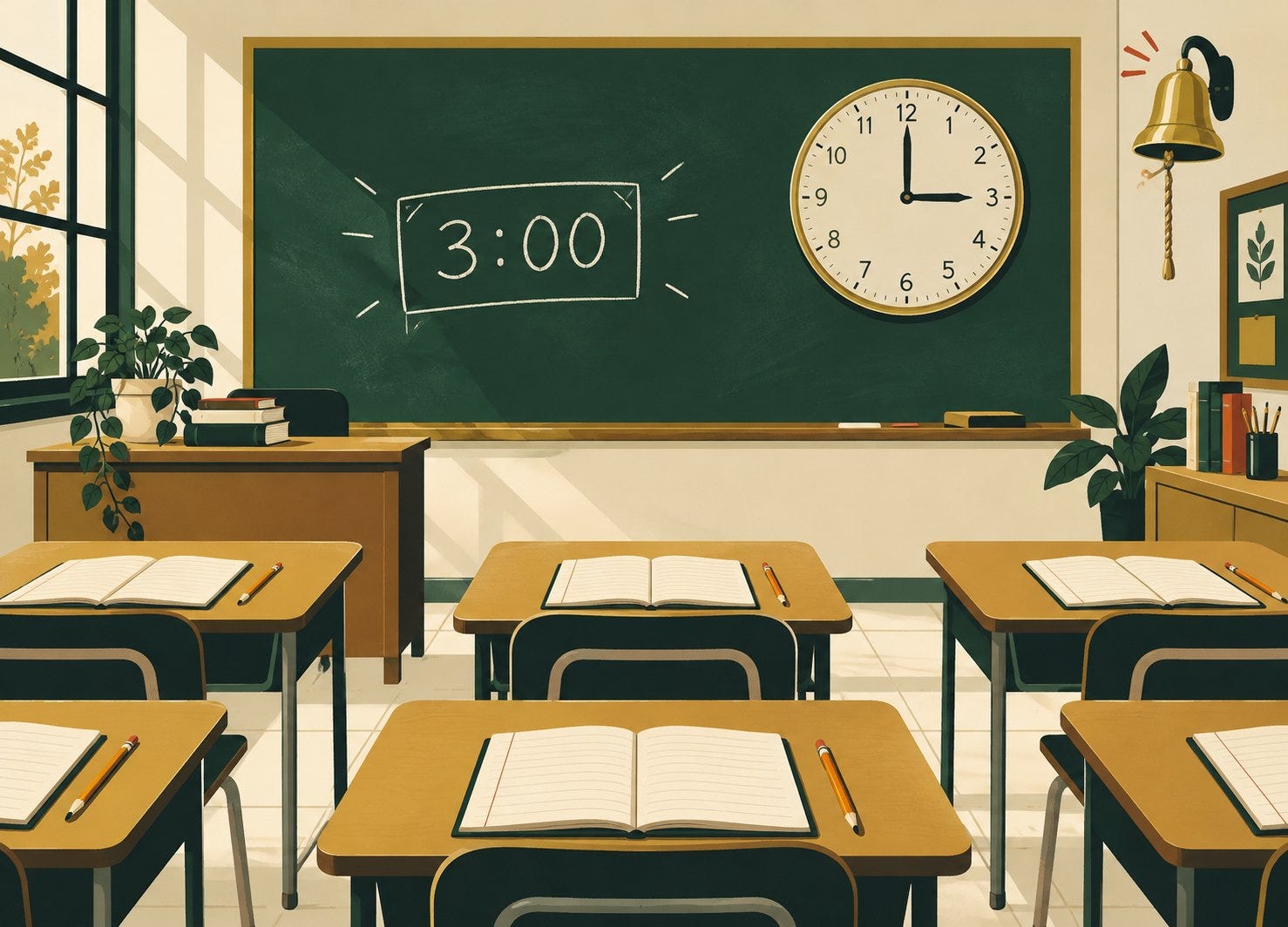
Students walk through your door carrying everything that happened in the hallway, at lunch, and at home. The first five minutes of class decide whether that energy turns into work or turns into a problem you spend the next twenty minutes managing.
A bell ringer is how you win those five minutes. It is a short task that is already on the board when students walk in, so they can start working without being told. While they work, you take attendance, check in with the student who looks off, and get the lesson ready.
If you have never used one, start with the short explainer: What Is a Bell Ringer?
Why most bell ringers fail
Bell ringers usually fail for one of three reasons:
They are not there every day. If the board is blank on Tuesday, students learn that walking in and talking is an option. A routine only works when it is routine.
They are too long. A bell ringer that takes fifteen minutes is a lesson, and it eats the time you planned for the real one. Aim for three to five minutes.
Nothing happens with them. If students never discuss, turn in, or get credit for the work, they figure out quickly that it doesn't count.
Fix those three things and the rest gets easier.
The five rules of a bell ringer that works
1. It is on the board before the first student walks in. Not after you take roll. Not after you find the slide. Before. Projected, written, or printed on desks.
2. Students can do it alone, without directions. If you have to explain it, it is too complicated for a warm-up. The best prompts can be read and started in under thirty seconds.
3. It takes three to five minutes. Set a timer and show it. A visible countdown does more for urgency than any reminder you can give.
4. It connects to something. Yesterday's lesson, today's topic, or the world outside the building. Current events prompts work well here because students already have opinions.
5. It gets used. Call on two or three students, collect it once a week, or have students keep every bell ringer in one place. A simple bell ringer sheet gives them a page for the whole week, and it gives you something to grade on Friday in about five minutes.
What a good bell ringer looks like
There are a handful of formats that work in almost any classroom:
Quick recall: "List three things you remember from yesterday's lesson."
Prediction: "Based on the title of today's lesson, what do you think we will learn?"
Would you rather: Two choices tied to the content, with one sentence explaining why.
Image prompt: Put a photo, map, or chart on the board and ask, "What do you notice? What do you wonder?"
Current events: A one-paragraph news item and one question about it.
Fix it: A sentence with errors, a math problem worked wrong, or a claim with a flaw in it.
For a deeper bank of prompt types, see Bell Ringer Questions.
Bell ringers by subject
Different subjects warm up differently. These guides break down what works in each:
Math bell ringers: Spiral review, estimation, and error analysis.
Science bell ringers: Observation, prediction, and lab-safety checks.
Social studies bell ringers: Primary sources, maps, and current events.
Grammar bell ringers: Quick editing, sentence combining, and mentor sentences for ELA.
Bell ringers by grade level
Middle schoolers and high schoolers need different things from a warm-up. Middle school students usually do best with structure, movement, and short, concrete tasks. High school students respond to relevance, debate, and prompts that treat them like adults.
The easiest way: let someone else write them
Writing a fresh warm-up every day, for every class, is one more thing on a list that is already too long. That is the reason Daily Bell Ringers exists.
Every school day, a new set of bell ringers goes live before the day starts:
Grades 6–8: ELA, math, science, social studies, and current events.
Grades 9–12: The same subjects, written for older students.
Past days go into the Bell Ringer Library, so you can search for something that fits your unit. If you need a prompt on a specific topic, the free AI Bell Ringer Creator builds one in seconds, ready to project.
If you would rather have a big stack to work from, grab the free 1,000 Bell Ringers and Exit Slips download.
A routine you can start tomorrow
Bookmark dailybellringers.org on your classroom computer.
Before first period, open today's set for your grade band and put it on the board.
Start a three-minute timer the moment the bell rings.
When it goes off, call on two students to share.
Students keep their answers on a weekly bell ringer sheet. Collect it Friday.
Run that every day for three weeks and watch what happens to your first five minutes.
Want more ideas?
For more on building an opening routine into your classroom management plan, see Bell Ringer Ideas on Elevate the Norm.
And when you're ready for the other end of the period, next up is exit tickets.