


Getting a room quiet is one of the most repeated tasks in teaching. You do it after every transition, every group activity, and every time the energy spikes. If it takes a minute each time, that adds up fast.
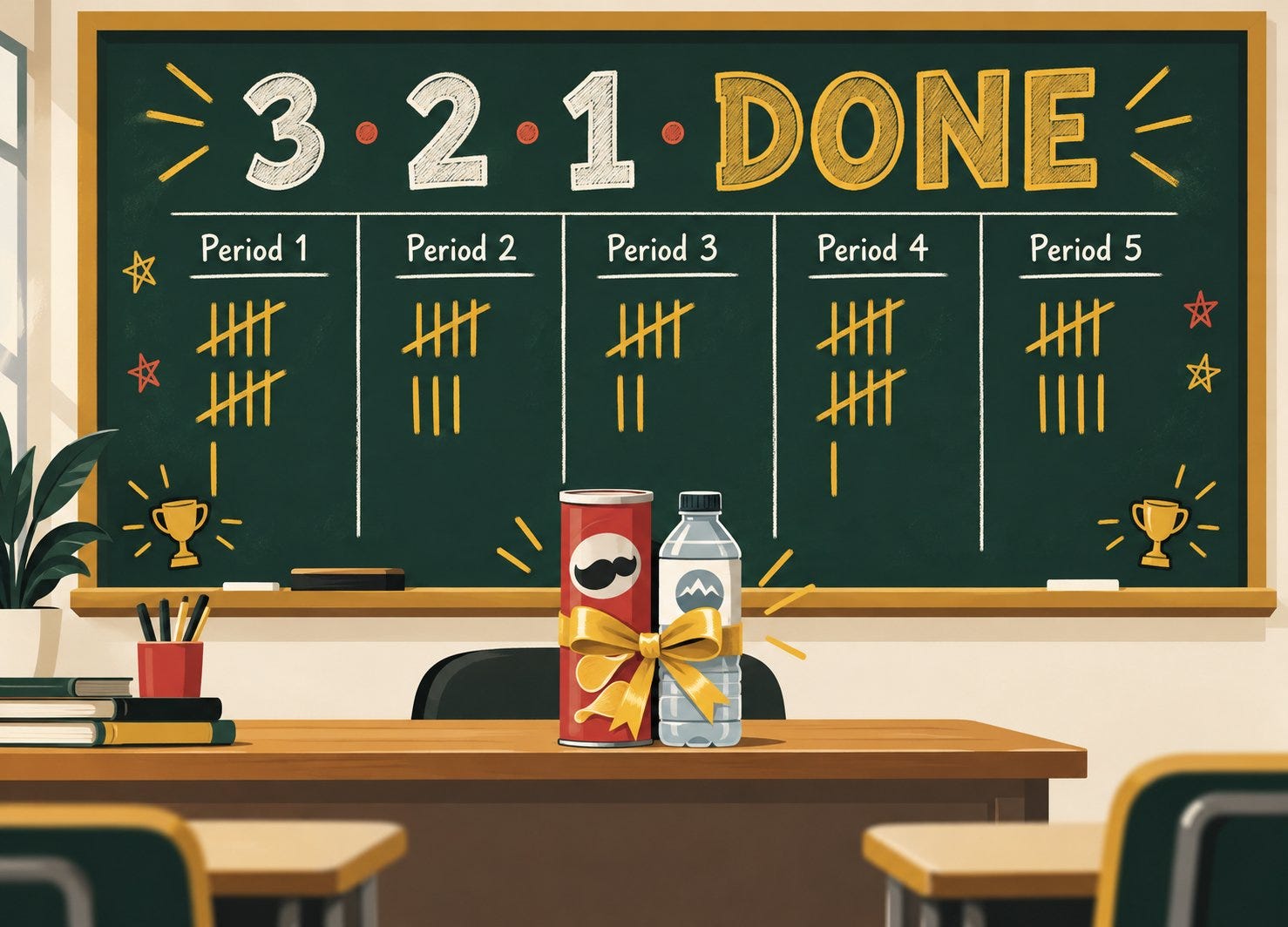
I run a class-vs-class point system I call 3-2-1-Done. It turns getting quiet into a weekly competition between my class periods, and the reward is simple enough that I can keep it going all year.
How it works
Every class starts the week at zero points.
When I need the room, I count down: three, two, one, done.
Quiet on three: 3 points
Quiet on two: 2 points
Quiet on one: 1 point
Quiet on done: 1 point
After done, the class loses 1 point for every second it takes. I count it out loud: "one Mississippi, two Mississippi."
There are optional add-ons, too. A class can earn a plus when everyone turns in their work, and take a minus for tardies. I keep the negatives low on purpose. The point is to reward the room for doing the right thing, not to pile on.
The reward
At the end of the week, the class with the most points wins Pringles, a water, and 15 to 20 minutes of their own time, as long as they stay seated at a low murmur.
That's it. It isn't expensive, and it doesn't need to be. What matters is that it happens every single week.
Consistency is the whole thing
A reward system only works if students believe it is real. If the prize shows up some weeks and not others, you've taught them the system doesn't matter.
So the key word here is consistent reward. Same countdown. Same points. Same prize. Every week.
Expect it to take time
Buy-in isn't instant. Usually it takes about three weeks before students take the countdown seriously. This year it took about six. Don't give up because week two looks rough. Keep counting, keep scoring, keep paying out.
Why it works
It's fast. The countdown takes seconds.
It's peer-driven. Students start shushing each other because their class's points are on the line.
It's positive. Most of the points are earned, not lost.
It's visible. Post the weekly standings and let the competition do the work.
Pair it with your bookends
3-2-1-Done works best when the rest of your routines are solid. A daily bell ringer gives students something to do the moment they walk in, and an exit ticket closes the period. The countdown handles everything in between.
For more positive reinforcement systems, see Elevate the Norm and the Classroom Systems Playbook.
Want it ready to print?
Everything above is free. If you’d rather skip the prep, my TPT store, Teacher Emergency Toolkit, has ready-to-use resources for grades 6–12. Start with SEL & Team Building or Classroom Management & Behavior, and check the Free Resources section first.