


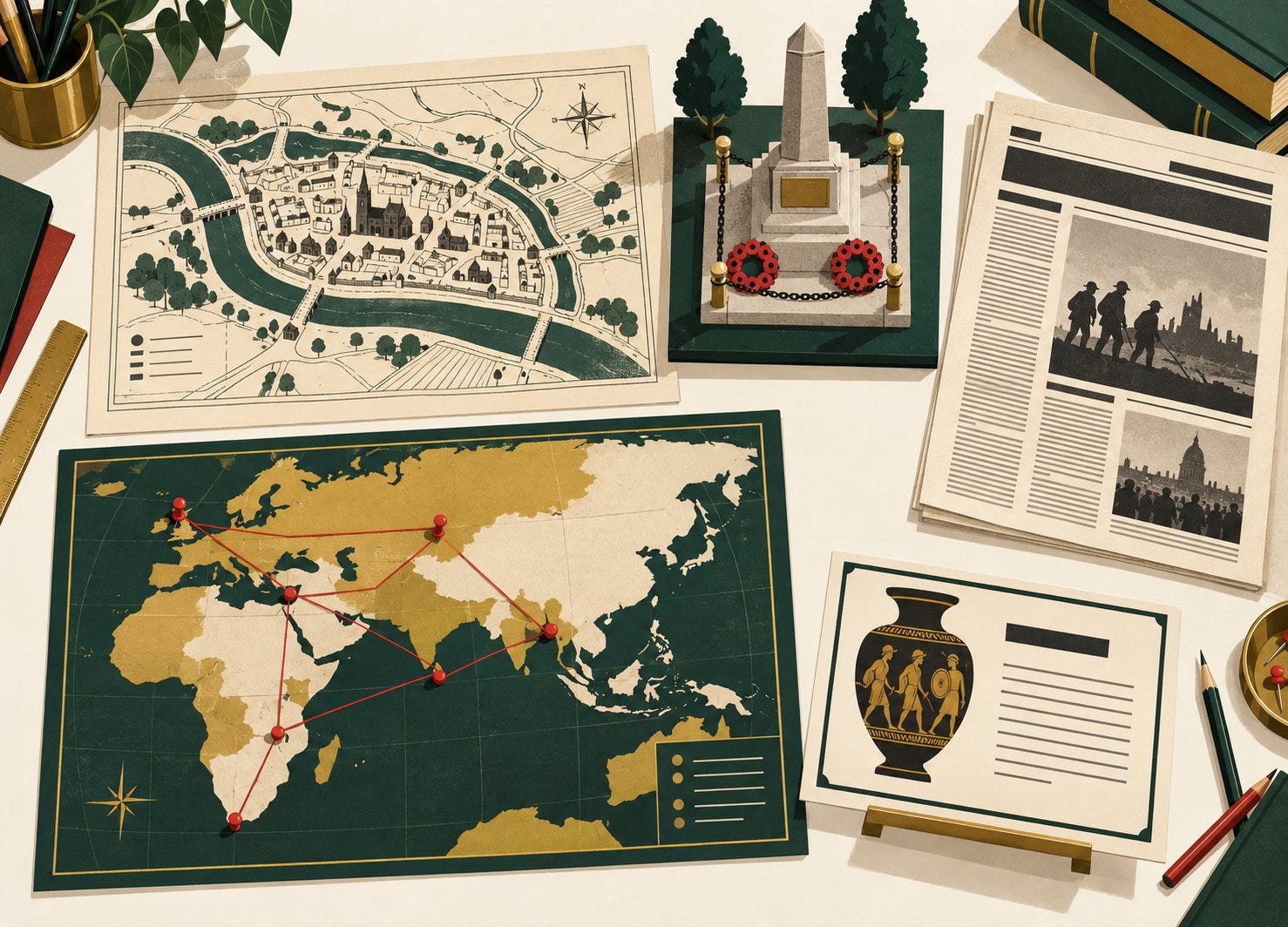
Most lists of history project ideas are really lists of activities. Build a model. Make a poster. Do a timeline. They're usually assigned after the teaching is finished, which makes them a reward, not a way of learning.
There's a better way to think about it:
"The project isn't what students do after they learn the history. The project is how they learn the history."
The ten units below are built that way. The content is what students need to finish the work, so they go looking for it. Every one is free to use and adapt, and none of them need a field trip, a budget, or a schedule change.
The full guide, with grade bands, timelines, and what goes wrong in each unit, is on Elevate the Norm: History Project Ideas: 10 Classroom-Tested Units for Grades 7–12.
World history
1. Industrial Revolution: Design a Better City. Students get a fictional industrial city with real problems, like overcrowding, pollution, child labor, and disease, and act as the reformers. The catch: they can't propose a fix until they can explain the historical cause of the problem.
2. World War I Memorial Design. Students study the war through soldiers, civilians, technology, and propaganda, then design a memorial and defend every choice in writing. A memorial forces them to decide what matters most.
3. Cold War Crisis Simulation. Students become a presidential advisory team during a fictional crisis modeled on a real one, with intelligence arriving in stages and no option free of consequences.
4. Create a Newspaper From the Past. Students report on a period the way journalists of the time would have, with headlines, editorials, and competing points of view.
5. Should This Historical Monument Stay? Students research a monument and argue a position with evidence. There's more than one defensible answer, and that's the point.
U.S. history
6. Constitutional Convention 2.0. Students take on the debates of the founding period and have to compromise their way to a working document.
7. Great Depression Family Survival Challenge. Students make the decisions a family faced during the Depression and justify each one with history.
8. Civil Rights Community Walking Tour. Students research the movement and design a walking tour that connects national events to real places.
9. Immigration and Migration Story Map. Students trace why people moved, how they traveled, and what they found, then map the story.
10. Build a Local History Museum. Students curate exhibits on their own community's history.
What makes these work
They start from a real question with more than one defensible answer.
Direct instruction still happens. Project-based learning doesn't replace it. Most of these units start with it, and it often comes back in the middle.
The middle checkpoint saves the project. That's the point where students have facts but not yet an argument, and it's where most projects fall apart.
Group size isn't the problem. Preparation is.
Go deeper
History Project Ideas: The full guide with driving questions and fixes for each unit.
Project-Based Learning: The structure behind these units.
Questions About AI and Project-Based Learning: How AI fits into project work.
Social Studies Bell Ringers and Social Studies Exit Tickets: To open and close project days.